
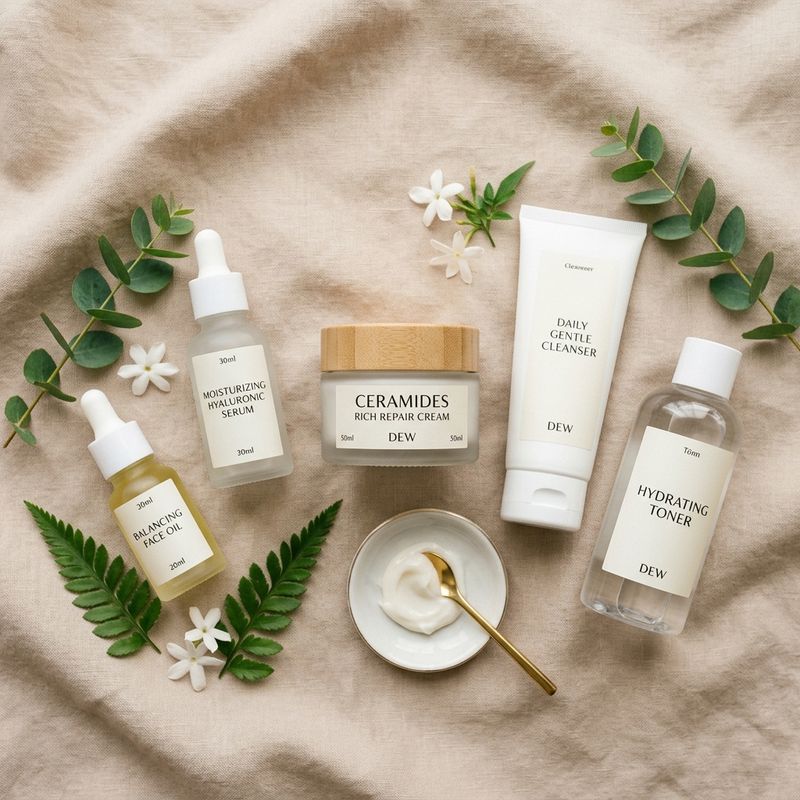
 Routines
A Daily Moisturizing Routine for Dry Skin
Dry skin needs more than just a rich cream. It needs a daily routine that helps restore moisture, protect the skin barrier, and prevent water loss throughout the day. When your skin feels tight, rough, flaky, or uncomfortable after cleansing, it may be a sign that your routine is not giving your skin enough hydration and protection.
Step 1: Gentle Cleansing
Dry skin can become more irritated when it is washed with harsh foaming cleansers or hot water. Choose a mild, low-irritation cleanser with a creamy or hydrating texture.
- **In the Morning:** You may not need a strong cleanse. A light rinse with lukewarm water or a gentle cleanser can be enough, especially if your skin feels very dry.
- **At Night:** Cleanse properly to remove sunscreen, makeup, and daily impurities, but avoid scrubbing.
Step 2: Hydrating Toner or Essence
After cleansing, apply a hydrating toner or essence while your skin is still slightly damp. This helps add the first layer of moisture and prepares your skin for the next steps.
Look for ingredients such as: * **Hyaluronic Acid & Glycerin:** To pull water into the skin. * **Panthenol & Beta-Glucan:** To soothe and reduce tightness. * **Aloe Vera:** For lightweight calming moisture.
These ingredients help attract and hold moisture, making the skin feel softer and more comfortable.
Step 3: Hydrating Serum or Ampoule
Next, use a serum or ampoule focused on hydration and barrier support. Dry skin often benefits from ingredients like **Ceramides, Peptides, Squalane, and Niacinamide**.
A hydrating serum can help improve the feeling of tightness and make the skin look smoother. If your skin is sensitive as well as dry, choose simple formulas without strong fragrance or too many active ingredients.
Step 4: Moisturize (The Essential Lock)
Moisturizer is the most important step for dry skin. A good moisturizer should not only add moisture but also help seal it in.
Creams with **Ceramides, Shea Butter, Squalane, Fatty Acids, or Plant Oils** are highly recommended. Apply enough product to cover the face comfortably, and do not forget areas that often become dry, such as: * The cheeks * Around the nose * Near the mouth
Step 5: Sunscreen (AM) & Richer Treatments (PM)
- **In the Morning (AM):** Always finish with sunscreen. Dry skin still needs daily UV protection because sun exposure can make dryness, dullness, and visible aging worse. If regular sunscreen feels too drying, choose a moisturizing sunscreen with a creamy texture.
- **At Night (PM):** Your routine can be a little richer. After toner, serum, and moisturizer, you can add a **sleeping mask or facial oil** if your skin feels very dry. This extra layer helps reduce overnight moisture loss. Apply facial oil only as the final step in a small amount.
Tips for Healthy Dry Skin
#### Maintain Consistency Changing products too often can make the skin more reactive. Start with a simple routine: gentle cleanser, hydrating toner, moisturizing serum, rich cream, and sunscreen in the morning. Once your skin feels more stable, you can slowly add extra treatments.
#### Avoid Over-Exfoliating Dry skin may look dull or flaky, but using strong exfoliants too often can damage the skin barrier and make dryness worse. If you want to exfoliate, choose a gentle product and use it only once or twice a week depending on your skin condition.
The best moisturizing routine is not about applying many products. It is about layering hydration gently and sealing it with the right moisturizer. With a calm and consistent routine, dry skin can feel softer, smoother, and more comfortable every day.